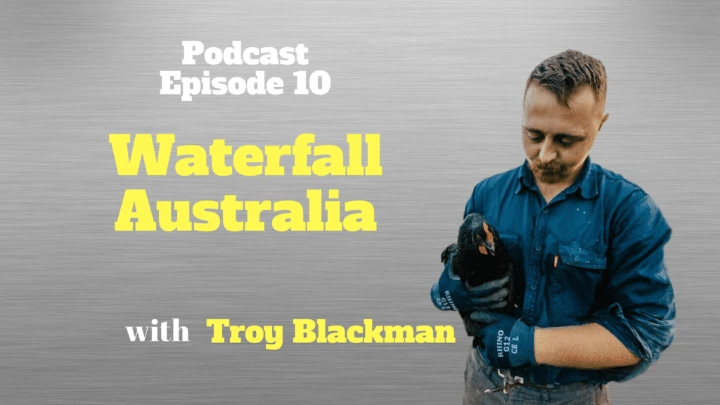
On this Podcast Troy and I talked about how he developed his farm. We also discussed the techniques he used for his farm.
Transcription:
Daniel: Daniel Obrien here, welcome back to Greengrasseggfarming.com. My special guest today is Troy Blackman from Waterfall Australia.
Troy: Goodmorning, how are you?
Daniel: Very well, it’s gonna be a good podcast today, we’re going to talk about Troy’s farm and you’ve got a couple of Chicken Caravans and cattle but first I wanted to hear a bit of background on the farm. Tell me a bit about how big it is and where you’re located there?
Troy: Our farm’s called Waterfall Australia, we’re located on the north coast of New South Wales. We’re 15 minutes inland from Coffs Harbour, some people might not know where the Coffs Harbour is, we’re six hours north of Sydney and about five hours south of Brisbane.
Daniel: Yeah great and how many acres is your farm there?
Troy: We’ve got two properties that we run our cattle and chickens on and then we just agist a number of other properties. In total our whole operation is about 400 acres in size.
Daniel: It’s all pretty close to the Coffs Harbour region, like all the farms are pretty close?
Troy: Two actually are adjoining each other. We have another one that’s about five kilometers away from the main hub of our operation.
Daniel: Great! Tell me how long have you been farming there?
Troy: In this area, we’ve been farming for about four years now. Not too long but as a family, we’ve been farming for 30 to 40 years.
Daniel: You’re main operations are cattle and chicken. Tell me about the cattle because you do some breeding and sell off some studs don’t you?
Troy: Yes, we basically start our whole operation on the back of the charolet setup. We moved to the area and then additionally brought in some stuff just, I guessed the cool part about breeding room for about maybe 12 months, we just operated with that, building up a younger females and then also male bulls that we sell to the whole East Coast. We ran with that for about 12 months and then after that we got that set-up in all of different areas you need to set it up from the property to marketing the animals and they’re just making sure that everything is flowing well and then we decided to add chickens to the mix.
Daniel: Why did you decide to add chickens to your operation?
Troy: Our area in general is not really known as a farming area. Like what I said only 15 minutes inland from Coffs Harbour and it’s very coastal so the type of pasture and various other things you have in the area, I guess they’re not very well conducive to farming life. In order to make it a profitable as an enterprise, we needed to diversify and get more income streams happening.
Daniel: A lot of people around Coffs Harbour that’ll be like a lot of lifestyle blocks like five acres is that right?

Troy: In my area like 15 minutes inland area, the most of the properties area around a hundred acres in size because basically there’s rules on what you could do on your property because it’s zoned rural but even with those hundred acre size are lifestyle blocks so they go at large in sense. Pretty much up until about five years ago the majority of the farms in the area went dairies and then due to recent industry changes and those various other things, basically they’re all sold up and moved on and then a being sold off as those lifestyle blocks and so myself and two other operators are basically the only commercial enterprises in the area as far as agriculture is concern.
Daniel: So most people having their lifestyle block, do they run a few cattle of anything on them or some of them are just empty?
Troy: Some of them are empty and they just simply load them with various other things, I say it’s probably a 50 – 50 split so horses are quite big in the area and with Coffs Harbour being quite close by. We have a lot of people that say “we live in Sydney” and they come up for weekends so they have caretakers on their property and then they can come up and sort of experience the farm lifestyle and then they can go back to their homes to Sydney.
Daniel: It’s interesting, I see so many places you’ve got like a hundred acres and some of them are empty and they are just mowing the grass and I like that example because a lot of people that don’t have a farm, it just open up the possibility that you don’t have to own a farm, there’s so much land you can go there and lease. Because as you said, they’ve got caretakers in so they want someone to look after it. I think anyone that’s starting a farm and don’t have any land – look for vacant land nearby, it sounds like you’ve got you’re own farm and you’re also leasing others.
Yeah that’s exactly right and the Coffs Harbour council you know they’re quite good in the way they connect with local people with the farms as far as leasing and suggesting goes. The council has a lot of federal funding to set up little initiatives so they have a website which I can find out later for you guys. Basically it’s a bit of like an airBnB where it’s connecting farms with people that are looking to lease in their set ups wether it’s cattle or chickens or even vegetables or more diverse operation as well. I probably meet with our local council at least quarterly if not more, when we have various days when get together and then we ask the farmers for advice and then it’s a very sort of two way approach as far as what they can achieve together and make it more productive to build up the area as well and also to support the local farmers and the people that are looking to get in the industry.
Daniel: That’s fantastic, I know that there are a lot of people that are listening that would wish their local council would be that much forward thinking, that’s really good and we’ll make sure that we do a link to that website, just in the show notes in the transcription. That’s fantastic with the council’s forward thinking to connect people, I think it’s massive opportunity all over the place whether it be Australia or even abroad, you’re linking up land with farmers.
Troy: Another point I’ll probably add to that, a number of things that I did to help my situation when I was approaching owners and people that had property in the area – you can’t simply just have a property and just let it sit there because it’s gonna deteriorate and basically don’t go down hill when you just let it sit there and grass grows and you have weed populations overtaking and things like that so for people that are looking to set up leasing arrangements and various other things, I guess in the sense you kind of doing the farmer a favor as well as them generating income from you leasing their property, you can also tell them that you are basically improving the value of that property by maintaining it in various different ways.
Daniel: Yeah and I know a lot of people that do lease land, they sort of going with that benefit with the farmer like especially when they’re going with chickens they say “If nothing, you’ll getting chicken manure spread over your farm so your grass gonna be greener and the chickens going through it’s gonna eradicate a lot of weeds that come in because you will get that nitrogen on your pasture, so it’s a stronger pasture, drowning out the weeds” so many benefits. Tell me you’re journey, you have the cattle and then you started with the chickens, tell me how long ago when that happened and what was it like when you first started on those challenges?

Troy: I guess towards the mid part of 2014, myself and my family members because we’re purely like a family run farm so we have myself, my auntie and uncle and then also my grandfather as well with their different roles in the property and then also during the different seasons, we employed people for casual work as well and I’ll talk a little bit about what that is later on. Pretty much we get a lot of research before we even started so we work and visit another farm, I once visited Chris Eggert in Wauchope which is a good friend of yours and helps you develop Chicken Caravans from the get go and then from that we visit a few other farms in Southern New South Wales that had different operations as well and discuss with them the different ways as far as practicalities of having chickens on the farm and how that could work to marketing the eggs and setting yourself up as an enterprise that way.
I guess October or November of 2014, I made a little prototype of a Chicken Caravan out of just an eight by five box trailer and I had 10 chickens in it and we got some portable fence netting. We’ve decided that, this will gonna be intro into how it actually works on a day to day point of view. We set it up in our paddocks and we have our cattles there as well. The way that we run our Chicken Caravans now is I guess what’s gonna be a holistic management approach and we can go into what is it later. I guess all of the investments from a financial point of view and also a time point of view to set ourselves up for a commercial operation, we made sure that it was actually practical for us and the farm in the area. I put together the Chicken Caravan in the trailer which is very humble, it was just like nest boxes and then we had hay in there as well. We had congregated tin on the roof and thing like that, it totally did the job so we had 10 to 15 Isa Browns in there and we started the trial in my property.
Daniel: What did that teach you, because I think it’s a great thing to do to start with a few just to see what chooks do, what they don’t do. Did you get much learning from that? That you’ve now taken on to how you manage it now with a couple of caravans and a lot of chickens?
Troy: As any farm we would know time is your friend and also very much your enemy and so you have to be as efficient as possible. So I very much learned very quickly that I couldn’t just come and go from the chickens five, six or seven times a day to do a different jobs, I had to be very focus and be very attentive to what I needed to do when I go there. When I was going down there, I was collecting the eggs but I was also making sure that the water was fine, that the feed was fine, that the fencing is functional so I don’t have to go down there more than one time a day and then that freed me up to do every other job that I needed to run the property because when we first started, I was wasting a lots of time doing that just in traveling time and that’s probably something that’s transition to all the other enterprises that I do in the property. That idea that you need to be focused when you are heading to a location because the travel time is the thing that actually let’s you down when you’re trying to be efficient.
Daniel: It’s very interesting that travel time, I know it when I consulted the farmers to actually budget that in because it’s all well and good to say. It only take’s me eight minutes to collect the eggs from the Caravan, it really doesn’t take longer, you wind them in, they got food, they got water. Depending on where you put the Caravan and how many gates you have to open, it could take you 15 minutes just to get there, you’re 15 minutes there and 15 minutes back, it’s half an hour everyday, that travel time will add up especially if you visit them twice a day, most chicken operations you just have to visit once a day. It’s good to talk about that travel time, I think any farming enterprise just look at how you are setting up your farm if you rather than going to five gates, can you put it in a line way so you just go down to the center and just open the one gate of the paddock because it definitely adds up over the whole year, the on-farm travel time it can be huge.
Troy: Yeah and it was something held us with one of their properties, we have a main property which is called Waterfall and that’s where we let our chickens and young cattle and we have another property which we called Two Rivers and that’s our main mature breeding property. At the time when we are first starting, we had this waterfall property that was recently well set up as far as fencing and infrastructure goes but I lead the property to rivers was a blank slate and it allows us to slow down and really can see on how we can set up that property to be most efficient. We realize that we could be more efficient with the way we set up our paddock sizes so we could have, I guess efficient grazing so we could bring cattle through graze and then allow the paddocks to rest a lot better and then we could also have laneways and various other things like that where we’re moving stock through that allows us to be more efficient.
Daniel: You started with 450 hens or after your initial one’s you got your 450 hens and now you’ve got 900 hens in all up, is that right?
Troy: I’ve actually have three Caravans in operation at the moment, yes.
Daniel: From your first one, what time frame until you brought your second and your third one in?
Troy: So we got our first Caravan on the start of 2015 and we basically gave ourselves probably six months between when we got Caravan on the ground to when we decided we’ll gonna order our second Caravan and that enabled us to make sure that the chickens were operating the way that we knew they would and we’ve done our research that everything matched the plan that we put in place and that we had our eggs marketed. Then we set up our branding and then we sort of establish ourselves in the area because they add your buying direct from the farm or buying locally produced goods is a little bit unfamiliar in the area that we’re in and I guess educating people on that concept is a little bit new until we gave ourselves a bit of breathing space with that and then once we establish ourselves and we had a regular clients, sell with restaurants and retail outlets then we can actually keep up with demand, we’re ready to push the button and go for Caravan number two.
Daniel: What period of time when you started marketing and you couldn’t keep up with demand?
Troy: It was actually quite quick. I did about a month and a half of just simply, I guess I’m working with what they call “cow calling” so going in physically saying local businesses whether it’s cafes and restaurants and also retail outlets, some small groceries some things like that and then giving them the information. That was probably the difficult part of this whole process was approaching a business and saying that we could supply them eggs but at that time I literally didn’t have any eggs to provide them as a sample and so I kind of had to go with them, approach that I have a list, not empty promises but like I have this idea and I have a listings in place and say “Do you want to jump on board? But I don’t have a sample to show you” and that was pretty interesting thing to go through for sure.
Daniel: Yeah I know what you mean, it definitely is hard, you don’t want to wait until you have too many eggs to start marketing but you don’t want to do it too early. That is a case of “What does comes first, the chicken or the egg”. You put in about a month and a half, about six weeks into that, you sort of finding it at the end of the six weeks, all your eggs was sold?
Troy: Yeah but that stage at the end of that six week period I probably had about two weeks before my chickens gonna start laying. So I spend a lot of time with the hatcheries and the places that we’re dealing with that we’re gonna bring our chickens to because we bought them at basically point of lay at 17 weeks so I could plan within two week period when I would be able to supply them those six hundred gram size dozen eggs. A lot of the local people were, I guess quite forgiving in that sense so the top people that I approach we’re small local independent businesses, I didn’t approach any larger supermarket chains.
They were essentially sold them the idea of the ethic behind what we are doing so we run an organic operation and then also the pasture raise approach as well is something that known I was doing in the area and I guess their local clients now becoming more educated and wanting more and the demand was increasing for ethical produce. They understood the idea that they could be at the forefront of that area, so that one of the main marketing tools that we used that got us close to our clients.
Daniel: So sort of found after six months, you sort of hit the trigger point you realized you gonna need more chickens then did you?
Troy: Yes, it was just simply we couldn’t keep up with demand, I guess roughly 50 50 split of restaurant clients and retails clients and the restaurant clients were interesting in that you kind of can’t not supply them their eggs, they need their eggs to obviously supply their customers but the retail outlets we’re a little bit more forgiving on that, that if they sold out maybe one or two days or three days that before you are ready to supply them again, they had the ability to disperse that over other products and things.
Daniel: You got a second Caravan so your flock went up to 900 and how was that marketing when you first got those next flock of chickens in, did you have through a lot more marketing to sell off those eggs?
 Troy: Yes, 50% of the supply then was already sold before we even got the chickens on the ground that was from current clients and also I had a list of people that were just didn’t wait essentially and I did the same approach again. I made a decision from the start which I’ll talk about this a little bit later but I deviated from a little bit that I was going to only approach local independently owned businesses, that way I could keep a really good relationship with them in most cases the manager owner, that was in-charge of the operation in that way if there was any issues some things like that then I could talk to them directly and hopefully solve that in a very human face to face way.
Daniel: Is that still the case now that you deal with just the smaller retailers or you’re dealing with bigger companies now when selling your eggs?
Troy: Currently we’re only dealing with local independent operators, I did for a time maybe about six months ago we could – I probably won’t say it in the podcast here but on one of the larger retailers and basically when I tried to go in their stores even though their market is being locally independent, all of their offices were based in melbourne so it took me probably about two months before I could get in touch to someone that could assist in that whole process and then also another third of month after that, we got into the stores and the stores I guess went on board with the idea of promoting the ethic of what we are doing in the area that we are local the things like that as much as I would like. It just wasn’t very successful for that reason because people had a choice, I guess the large part of it was also a lot of people are going to these groceries stores with just simply after the cheapest price, they weren’t after a specific type of produce, the organics or some things like that didn’t really play a part of their decision making.
Daniel: I think there’s some big lessons there and it’s one thing I learnt when I started my egg farm is the bigger the company you approach the longer the time frame, it’s not a case you ring them on Wednesday, see them on Thursday and they buy eggs from you on Friday. As you said it’s not like that at all and the bigger they are the more disconnected they are from you being a supplier, being a farmer and really them and also their customers, they’re looking at the price list they go “Right, you’ve got eggs, how much are they?” they don’t really care about your brand or how they’ve grown. I didn’t have much success with it and it’s interesting hearing your story of, that doesn’t sound like you have a lot of success with them either.
Troy: No not at all and that brought us to one of our biggest challenges that help us in what we’re doing in ours as well but differentiating ourselves from other egg producers as far as free range or pasture raised organic as well because the clients or the customers that were in this grocery shop that quite large, they didn’t really have an understanding of the difference between an organic pastured eggs production and just a general free range production and all we see that’s changing now will continue to change over, this was probably 12 months ago when this happened and so the idea of stocking rates and the way are animals are raised and animal welfare and things like that, wasn’t really at the forefront of people’s choices when buying eggs at the time anyway.
Daniel: Tell about your operation, you said before that you run holistic management operation, just explain how that works when your chickens and cattle are working together.
Troy: Yeah sure, in very simple terms, our properties are broken up into a number of paddocks. I guess like I’ve been understanding the amount of the stock and rates that the paddock can take in for how long and all we see that changes in different times of the year and so we’ll bring in a mob of cattle, I actually have a different mobs of cattle, we have a studd operation which is stud males so we have bulls that we sell it to East Coast when it matures and then also we had that female breeding operation as well but we also had a separate beef breeding operation as well.
When the animals reached a two year mark we retail them direct to customers with their help, they were in a specific mob that I graze in front of the Chicken Caravan so their about 40 to 60 head in size so they’ll go in the paddock at the start and graze down the paddock, usually it takes two to three days depending on the time of the year, usually longer in the summer and then once they’ve grazed down the paddock I will move them to another paddock and then I’ll bring in the Chicken Caravans then after. This is probably some of those things that people aren’t aware of is we actually move the Chicken Caravans quite a lot because we’ve seen the benefits of not over stressing the pasture so the chickens basically scratching away too far or the Caravans are ruining the pasture on that sense but we move them probably every five to seven days into the whole new area and within that five to seven days we actually move them once more as well within the set up that we have.
The cattle will go out on that paddock and we bring in our Chicken Caravans and they run basically side by side in the electric fence netting set ups and then they’ll be put into the pasture because the cattle have been there before you’ve got all the cattle manure and various other things in the ground and the chickens will do what they do naturally and they’ll scratch the manure and they will eat the worms in the manure and essentially they’ll be like cleaning their pasture for that.
Something that I didn’t really understand fully before we started but I do now, definitely is that the cattle is very picky in the type of pasture they want, they want the most nutritious pasture which is where is the chickens actually aren’t very picky and they go and eat the things that cattle left behind, they consume quite a lot of diet of the pasture and that’s another benefit of moving as well we’ll reduce their feed rights because they are moving so much so they’re consuming a larger amount of diet from the pasture as well and so with that , they will stay on that area for five to seven days and then I won’t have to move the whole setup of Chicken Caravans, maybe once or twice within the size of paddocks that we have and then I’ll move on to the next paddock after that.
Daniel: So since having the chickens, what benefit have you seen from your pasture that now you are running this system rather than just running your cattle?
Troy: I guess from a soil health point of view, I’ve seen a more balance reports, so we do soil reports basically every 12 months and sometimes we add an interest, some things like that. Definitely more balanced report as far as the mineral content in the soil, your organic activities increase ten fold from what it was before because when we move to the property that we are using, I guess like a very straight synthetic mix so very high levels of urea and things like that. From that it’s definitely in simple terms, made them all balanced approach which from a mineral point of view and from the pasture point of view it’s a lot of pasture to access the good minerals of the soil that I couldn’t access before and then when you look at the levels of top soils and other various things in the soil, you can see that’s solely growing as well.
Daniel: Something else I wanna touch on, I believe you’ve built a farm shop on your farm like a retail ship. Can you tell me a bit more about that?
Troy: Yeah sure, this probably started when we decided to retail our beef directly to our customers, we tried probably for a little while just selling our beefs to wholesalers, abattoirs and things like that and we can sell and this was probably like 2012 to 2013, just wasn’t making other operations viable and so if you’re talking around that time but we’re talking maybe about four dollars a kilo for dress white cockases and it changed quite a bit now, we’ve got up to new six, 650 potentially depending on what you are providing.
That time we just decided that it wasn’t viable and a long term goal for the whole approach was to market our produce direct to our customers anyway but we just kind of fast tracked that because we realize that it just wasn’t what we thought to do what we are doing and so slowly we develop our relationship with a local butcher and this was something that takes quite a bit of time because approaching a butcher and asking him to process your cattle for you and bag it up and get it ready for your customers is a tricky subject because in some prospects we kind of taking their customers from them but then in other prospects we’re completely different thing altogether as well like the butcher that we deal with now didn’t really provide the product which is similar to what I am providing now and so it wasn’t really direct competition with what he was doing anyway and then also it’s providing him with steady income because he charges right for us too, have a bodies processed through him and so it’s quite a good regular income for him as well.
So from that we established every part of the beef set up so we could supply direct to our customers and then we needed more less a pick up point for that so we starting open days on our property and that allowed the people that are buying our eggs to come at to our property and see how we raised our chickens and cattles in a holistic management approach and that actually bumped our eggs sales up probably about 25%, actually just been a very short space at time and that lead us to making our third chicken caravan purchase pretty confidently and then from that, it was just simply people coming out to the farm and looking over the farm and tools and they then pick up their beef packs that we prepared for them and then we decided that we’ll gonna make it a regular thing. From food authority licensing point of views, we wanted to be compliant even if we are already complying, we want it to be more complying and more professional in the way that we approach our customers and a cooler cell systems set up in one of the rooms that we dedicated on our farm for that and slowly just grew to us having our eggs and beef for sale from them.
Daniel: So with the farm shop, is that only open on open days and tours or how does that sort of operate?

Troy: It is yes, at this stage we probably do to an open day, maybe every two to three weeks, it should doesn’t go much further than that, usually we do two a month and then with that we’re open on Sunday as it is the time that usually most people had free time with Saturdays being maybe the majority that the days that family do sports or some things like that. We tried saturdays and we tried Sundays as well and we did a little bit of a switch and then we realize that the sunday was the day that was most convenient for everyone and so we stuck with the Sunday and then with that we catered our times around the time that’s most convenient for the customers so on the sunday we will open in ten o’clock in the morning and we will be open ‘till two pm in the afternoon and then at 12pm they’ll be a walking farm tour of our whole operation and show everyone the cattle and the chickens on how they work together and during that time, people can purchase the eggs and beef from our shop and we also have our mobile coffee van that comes out as well. It’s a way that people making their day, so they come out if the day is appropriate, they’ll have picnics and various other things and then we’ll just sit around and kind of hang out a bit and people just ask questions about the farm and the way that we farm and the things like that so they can be more aware of what goes into the produce that they’re consuming.
Daniel: It’s great having such level of transparency, you just don’t get that and I think when you use that as a marketing technique of coming out to the farm, you can walk around, we can show you what’s going on, you can purchase a produce. The big supermarkets like we’re talking about, they can’t compete with that, they just can’t with that level of transparency and people want that, they wanna know where did it come from, tell me more about my food.
Troy: That’s exactly right and that brings up a bit of discussion around the ideas of certifications and things in my experience like I couldn’t afford the costings involved with being certified by third party but what I could afford over so I must build up a farm based on what we understood exactly what we did by opening up our farms and being 100% transparent as far as what we do, the feed that we have, what we do with that pasture, all of that sort of stuff.
Overtime it became the entity of itself and the idea of our farming methods is kind of unique with ourselves and so when people are approaching our produce in the shops of town and some things like that, they could trust our brand because they’ve come into our farm and have seen that. That’s an ongoing evolving processes as you come to understand that produce and try it for themselves.
Daniel: So most of the people that come out, are they came from the Coffs Harbour region about 15 to 20 minutes away?
Troy: Sometimes even further, we supply Coffs Harbour which is 15 minutes from where we are and then we supply further from the coast about 30 kilometers away from that and then we also supply for the south down the coast probably 40 minutes ride for the south from Coffs Harbour as well. It’s quite a large circle area or I call it the Coffs greater area where we have a large number of people and because of social media has a big part of what we do and how people could connect to our farm beyond actually coming out to them and being on them, it spreads quite quickly and we have people that potentially traveling an hour and a half to come to our open days.
Daniel: If someone wanted to find out more about your operation, where can I find you on the net or on the Facebook or to book in for one of your open days.
Troy: Our website’s waterfallaustralia.com.au and then we’re also on Facebook just search for Waterfall Australia and we’re also on Instagram as well and search for Waterfall Australia as well.
Daniel: Excellent well thank you so much for your time today and I’m look forward to doing another podcast with you and we can probably talk about the farm shop and the open days and of actually how to do that because there’s obviously huge benefit for your farm and Thank You for your time today.
Troy: You’re welcome and that’s the best thing about the idea of making things more local and more personal that whole idea of the farms and the farmer operators been more smaller and this whole community around the idea of the ethics to fix some things like that, the way we are raising the animals differently, there’s really no competition in that between farmers and the idea that we can get together and do things like this podcast that will help each other out is a great thing and that was something that I valued when I started was the idea that people would open up their farm and give their time mostly free actually which is to educate me on the practicalities of farming this way is something that I’ll do my best to pass on as well and keep the whole thing going because it’s such an important thing.
Daniel: We all learn so much more when we collaborate our ideas especially in the farming space because sometimes it can be a very, you can sort of be a lone ranger and everyone’s got their farm doing their own thing and when we open it up and talk about it, I think we can all benefit so much.
So thanks again Troy and I’m sure we will talk again soon.
Troy: Thanks Daniel.