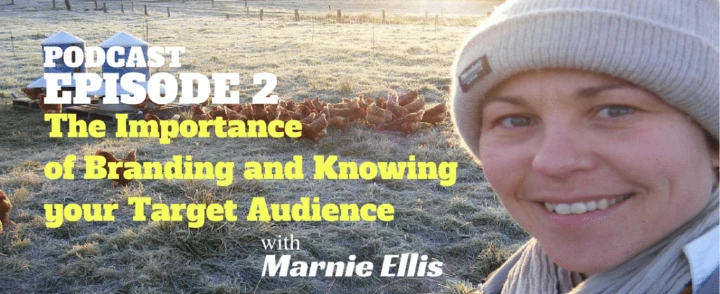
On this podcast, Daniel talks to Marnie about the importance of branding and knowing your target audience. They also discussed what techniques and procedures that Marnie does in order to accomplish her desired outcome when marketing her pastured free range eggs.
Transcription:
Daniel: Daniel O’Brien here welcome back to greengrasseggfarming.com my special guest today is Marnie Ellis from Gippsland Free Range Eggs, welcome!
Marnie: Thank You!
Daniel: So today, we are going to be talking about the importance of branding and knowing your target audience, so Marnie, tell me why that’s important?
Marnie: Thanks Daniel, probably the biggest thing we found when we started was the importance of branding to help people feel connected. I know when we first started we only had 30 hens and a local marketing person here said, “We’ll get your logo and we’ll organise your website” and I thought that was ridiculous because we only had 30 hens, but I realised pretty quickly that you can build a story. You know, people want to know what you’re doing and even though we had 30 hens, by providing or creating a logo that says ok, this is Gippsland Free Range Eggs, you’re going to see this logo around a bit more. We sort of got talking, things started evolving from there and the logo popped up and we got the website going. We were able to share a story and that’s what I think is really important. People start to feel connected with us, they want to be a part of what we were doing, they want to grow with us as we grew. And that’s one of the main reasons (for branding), one of the things that I see is of real benefit.
Daniel: Yeah right, it’s interesting that you speak of the story. One thing I find, in so much to do with food today, there’s no transparency. You go to the shops, you buy some bacon, you don’t know, did it come from Australia?, did it come from overseas?, what state of Australia did it come from? It’s very unconnected. I think you’re right. When someone can pick up a product and they can find out a bit more about it, I think that connection is really important and it is refreshing because we don’t see it.
Marnie: Yeah and that’s what I find, you know I have people will send me messages or see me in the street and say, “oh! your eggs remind me of when I stayed at my grandparents when I was a kid” or “we drove past your farm on the weekend and we realised when we saw the logo, it was your place” and they get all excited about it and they want to know what’s happening next, and they want to know what else do you do or when can we get the eggs, when’s the gate open? When is this happening? It’s almost like they become a part of your business and they like to tell people that they know you, or they’ve spoken to you, or they have friends down from Melbourne on the weekend and they say “we’ve got to go out there and get eggs on Sunday morning” so it becomes a bit of a connection I suppose, especially to their friends in the city who may not have the same opportunity as they have, to come out here and buy and to get fresh food or to actually meet the farmer at the market, those sorts of things. They love it, they get a real kick out of it.
Daniel: Yeah! It’s interesting that with farming, for someone in the city, like you mention, they have the opportunity to come out to your farm. For a lot of people they just don’t have the opportunity to connect with a farm. For most farms the gate is closed. Unless you know someone with a farm we can’t just go out tomorrow and visit a farm.
Marnie: You could but I don’t think you would be well responded to.
Daniel: Yeah, while you are looking around. But they can live through your experience of owning a farm and do you feel some of the struggle with that is, you and I take it for granted. There’s chooks right out in the paddock, there’s some cows as well, the sun shining, it’s normal to you. How do you find, conveying that message to remember that that’s not normal to your customers?
 Marnie: At our monthly markets at our local township here in Traralgon Victoria is probably the best reminder of that. Because we’re going there you know, the day before we’re busy, we’re packing, we’re putting things together thinking what are all normal people doing when they’re not working until late at night packing eggs. And we get to the market and we’ve got customers, the same customers are generally there early in the morning and they’re all happy and they want to say that they’ve got their friend here today and they’ve brought them down to buy eggs. Or they say, “We drove out on the weekend and we saw your dogs over the fence” and that’s a pretty good reminder that we actually have got a pretty good life but to most people it’s not the norm. I mean I grew up on agriculture, I grew up on farms – not chook farms, beef and sheep farms. Still to me that’s normal, to my children that’s normal but we do meet people like I say at the market, or when we have school groups, school groups are another great one because kids come out and it’s like they’ve been let out of a box! They go running across, you know, we’re only on 40 acres but we do have access to all of it where the chook enclosures are.
They go running across the paddock and they get excited about open air and they get all excited about the chooks and that’s a really good reminder every now and again that actually, what we do isn’t the norm to a lot of people and we probably need to be able to share it and open our doors probably even more than we do and allow more people to come and see what we do, even if it’s not to see what we do but to allow them to connect with the food. It might not be eggs, it might be someone at an orchard, it might be, I don’t know. . . someone growing free range pork. But the more people that connect with their food, the more of an asset they going to be to your business long term.
Daniel: Yeah, definitely, so when you talk about branding, branding is a logo but it’s also you. It’s who you are, what you do. Tell me a few other aspects that you’ve learned since you’ve started, of the importance of branding and whether it be your logo or you, what are some other aspects of branding?
Marnie: The logo, like I said at the start, was definitely a big part of it and it’s a basic logo. I didn’t want anything over the top so it almost looks like a bit of a cartoon drawing but that all of a sudden became the face of what Gippsland Free Range Eggs was about. But then I realized the people wanted to know who was behind it, ok here’s a logo, ok we know that’s Gippsland Free Range Eggs but who is Marnie, who is Shane, who are their children, where do they live, what do they do. At the start I found that a little bit confronting because people wanted to really, almost get a piece of us to know exactly who we were.
But the reality is, I found the pictures of us as a family, or pictures of the kids and uploads of the kids doing things on the farm, introducing them to the kids at the open days, allowing the kids to talk, our boys to talk about what it is they do here or an aspect of the farm – all of a sudden people realized that we’re real, we are family, we’re not a corporation, we’re not a big business, we’re not employing loads and loads of people, we do have a few employees but, it’s more about a family farming business and I find that allowing people to know the faces behind the business has been massive, it’s a really big deal. Like I said, people love that. People love that they can know their farmer. I mean they see things going around now about meet your farmer, know your farmer, and again I used to think that was all a bit silly – we’re just farming, you know. It’s really not that big a deal. But to people who don’t have the same opportunities and who don’t have the land or who don’t have the knowledge and the know-how to be able to do that sort of thing it’s really an important part in opening up those doors and knocking down those barriers where people just go and buy food, whatever food that maybe, and not know its background I suppose.
Daniel: Yeah! Now one thing I like, when you said, who is behind it, because you said, a logo is the face of the business but people want to know who’s behind it so that, as you said, they know that you’re real. I think because we’re in a society with so much digital stuff, we have Facebook and we’re all on our phones. There’s a whole bunch of stuff that’s either not real or you don’t know if it’s real. It’s so easy to hide behind just putting up a new logo and starting a company or something. Unfortunately, in the egg market in Australia, there’s nothing stopping me tomorrow from going to Sydney market or Brisbane market to get a pallet worth of eggs and packing them under my brand and selling them.
Marnie: That’s the hard bit, that’s where, for us especially with eggs, because there is that risk, there’s none of those things in place that stop you from doing that, that won’t stop anyone from doing that, that was a really big part of us knowing our audience and running a transparent farm where people can actually see what’s going on, meet us, know what we do, know that they can ask us questions, know they can ring us if they need to. I had a lady call me the other day and wanted to know why there was one white egg in a whole carton of brown eggs.
It just happens that as you know every now and again from ISA browns, we have light colour eggs and I hadn’t thought of it when I packed it, but she rang the number on the box, she got me directly, spoke to me happy as, thanked me very much for my time and then emailed me later and said “you’re right there’s nothing wrong with that egg it’s just a light colour and the others are brown”. That’s not a huge big deal but if that person purchased that from another company or another supplier and they couldn’t then access the person who produced that egg or packed that egg there’s a fair chance that they might not have eaten it and a fair chance that they might not have purchased that carton again.
Daniel: Yeah, now I think it’s so good and one thing I’m passionate about with small farms, is doing exactly what you did there, just letting customers have access to you. It’s a way you can win against the big players because Coles and Woolworths couldn’t do that. If I walk up to the cash register and said, “oh you had some other eggs last week and they’re not there, are they out of stock or have you stopped stocking them” they wouldn’t have a clue. They’d say “I don’t know, do you want me to get a manager” or something, and then the manager probably wouldn’t have a clue either and you realize how it is so disconnected. Yes, it’s convenient to shop at Coles and Woolies but the actual connection to the food is just not there… so when you can offer connection, you’re doing something that they’re not and that’s differentiating you in the market place and just that alone gives people the confidence that they are getting better quality food.
Marnie: And they’re getting what they paid for. Exactly what it says on the packaging is what they getting and if you can give them that confidence they going to be coming back for more eggs. It’s a fair chance they’re going to tell their friends about these eggs and that they’re just down the road. That they can go out there on open days or they can go out to the farm to buy eggs. People talk you know, if you open yourself up and allow yourself to meet these people and have a conversation. The farmers market is a classic place for talking about everything. They’ll come in and say, “This is the chook lady! This is Marnie” and then, “we’re having trouble with our backyard chooks. What do you know about this?” They really feel that they can talk to you about their backyard chooks and the problems in their backyard and those sort of things. It’s funny how it works but it works. People really want to become connected.
Daniel: That’s interesting, you are saying that they tell their friends, “He’s my friend” and they introduce you. Just like you said, people talk. From what you’re saying, they started being a costumer who wants eggs, wants them in a box, and then they realise “Hang on, there’s a face behind that logo, behind those eggs, someone who created them.” Really what you’re talking about is they turned from a customer into a raving fan because they’re thinking, “We’re buying these eggs, we’re telling our friends and it’s a part of our life.” If you look at their week, it’s got so many minutes in the week. There’s so many minutes of that week where they’re using your eggs or they’re driving to the farmers market or out to the farm to get those eggs, they’re telling their friend about them. You couldn’t get better marketing. As you said very early on they are connected with what you do and I think you probably agree that those people will be happy to be connected now forever.
Marnie: Absolutely! They want to know what happens next, ask “What are you doing, what’s going to happen next on the farm, when’s the next day?” I could think of three people off the top of my head directly, who monthly want to know, “What are you doing this month on the farm? Can we come out?” We don’t have anything on monthly at the farm, but people can see over the fence, there’s particular people who come to the market every month. It’s like it’s their monthly Saturday ritual. Or it’s their Sunday ritual is to drive out here with their family, get eggs, the kids get out of the car, get the eggs, it’s so exciting, put the money in and then they go back home and they cook family breakfast and Gippsland free range has become a part of their Sunday, their weekend Sunday ritual. If someone had said that to me at the beginning I would have laughed hilariously cause to me that just seems like, really??
Daniel: I have to say that’s so corny, that someone actually does that? Really?
Marnie: They drive out in their pyjamas some of them on the Sunday morning. They’re quite happy to tell me or I greet them at the gate and they say, ”Sorry! We’re still in our pajamas!” But that’s what it’s become. To some people it’s become a Sunday ritual and they know us all by name and my boys by name. At the market it’s very unusual for someone to come up and not say, “Hi Shane” or “Hi Marnie” directly. It’s only a handful of people because there is repeat customers monthly.
Daniel: Yeah, it’s interesting they ask “What are you doing next? What’s coming up?” They want to go on a journey with you. They want to feel that they’re involved because for them they are. They buy these eggs not from a corporation, not just from a supermarket, but they’re buying it from people. People want to do business with other people. It’s interesting. They are a part of it. They’re living, some of them, their farm dream through you. That’s how they live their dream: “I don’t have my own free range egg farm but I’m connected with my local one”. And tell me, with branding and really knowing your target audience and they’ve found that there is a face behind the logo, behind the brand, they’re connected now when they come on a journey, how have you found it now, when you’ve added other products? So a raving fan, who loves what you do, who buys your eggs, how have you found it when you say to them “by the way we also have other products to sell.”
Marnie: I have found that I need to have a lot of those added products straight away. When we first introduced beef, we thought about it, we thought we’d try it with the people at the market, we’ll ask a few people at the market and I thought maybe two or three people might say, “Oh that’s a great idea you know” but it was actually a lot more than that and we realized that it was okay, this can happen. So we started with the beef and then it’s become excess fruit from the orchard and excess veggies from the garden here this year. I’ve just put it at the gate and let people know, say at the market. I’ll put a sign at the market saying, “Next weekend – tomatoes at the gate” and people just say, “Awesome, what’s next?” and they are sort of now just expecting that it will be more than one thing, that we do more than one thing and there will be something else coming up.
The eggs almost gave us a captive audience I suppose and they were and are extremely interested in what we do and how we farm. Anything else now that we bring into the mix, those people are already sold. They might not be, down the track. It might be honey and they might not be honeyeaters but they will know somebody that eats honey. It’s been a really worthwhile thing to have done and I’m really glad that I’m a people person, and I love being around other people and I love talking which is quite evident at times but it’s a really big part of it. I thought that in the start it’s just a chicken logo, it’s a bit silly we only got 30 hens but that now tells those people exactly who we are and what we do. The things that come on board now, are just a bonus to those people because they can access more things and find out information about other things through us and it’s huge. Don’t underestimate it, is what I tell anybody. It’s huge.
Daniel: Yeah, it’s amazing just starting with those eggs. In a business terminology a lead product, buy the eggs first, but also as we just talked about, it’s not just the eggs it’s who you are, the face behind it, the being connected and then it’s a case of you say “Oh by the way we got some beef, who’s interested?” Well, everyone, because they are not customers, they are raving fans now. What else have you got coming up. I think that’s so interesting, they want to do that journey with you, what’s coming next. It’s almost like a sequel, you bring out one birdie and another one, another one and another one.
Marnie: It’s a funny thing. I look at the way that people want to be connected and I have people say “oh this is exactly like my parents used to farm or the way that my grandparents used to farm.” I think as people become a little bit more unhappy with food that they’re buying at the supermarket and it’s packaged here, but it’s not all from Australia, some bits of it are from Australia. I think as more people become really aware about what they are putting in their bodies and they want to know that it’s real food or for some people it might not be the actual fact that it’s real food, it might be that it is from really local. As you know our business model is all based around very local and I know that a lot of people initially come on board because we were local.
It wasn’t that, you know we can actually get free range eggs cheaper somewhere else but we going to use yours because you’re from here. So it’s not necessarily all about the connectedness to the food, it might be the food miles might have had something to do to some of it. It’s mind blowing how intricate is but also how so many people want to know and specially we’ve seen in our tight community in five years on just how connected they want to be, they want to know where their food come from, they want to know where it was grown, they want to know what that animal ate in the lead up to it producing that egg.
Daniel: Yeah, and really all of those things you talking about, they’re emotional decisions like, when they say “oh these are like the eggs that I remember from mom and dad’s farm or grandpa’s farm” that’s a memory which is an emotion or it’s a case of I want to get something local, that’s emotional, they are attached, they’re part of the community that’s important to them and as you said, it’s crazy to think people would make their buying decisions based on knowing the person behind the logo or because it’s local, but it’s true and we all do, and we want that level of trust and transparency.
Marnie: There’s people I know, two lots of people who come to mind directly, used to have hens in their backyard and they like to go away on holidays, they always have the trouble over Christmas of who’s going to look after the hens, so they said to me “Really Marnie, the amount that we were feeding our chooks, the amount that the wild birds were eating, for the amount of eggs we were getting, we’re not going to have chooks but we’ll just going to buy your eggs all the time.” There’s people who made a decisions, not to have their own backyard animals because they still feel like they can have that beautiful connection but not have all the responsibility that goes with it.
Daniel: Yeah that’s really cool. Let’s just recap so, if someone is starting out, wondering what do we need for a logo, we going to need a logo, is that right?
Marnie: Absolutely yep, and it doesn’t have to be big and glossy, it just needs to sort of encompass exactly what your business is about.
Daniel: Yep so, you’ve got a logo. And so, tell me, you talked about the logo is the face of the company but people want to know who’s behind it, so if you have a logo set up, what’s the next step to really show who’s behind that logo.
Marnie: For us, and you may have some other ideas, but for us it was a website, I mean I thought it was ridiculous. Again, we had 30 hens but it was a website that really only had one page at the time and it was called “About us”, and it was a bit of a background as to where we came from, why we had a website, what we were about and what our plans were over the next two years, and that’s really all it had. Then the following six months from we first started selling our eggs in outlets, we listed the outlets where we sold some of our eggs.
People were engaged and they were going back every now and again and they wanted to know what was going on and along with that hand in hand we started to use Facebook and people would keep up to date through Facebook. But it was all about building a story and people getting to know who we were, what my background was, what Shane’s background was, how old the kids were, what the kids do at the farm, all that sort of thing and it just evolved really and again I did think it was silly at the beginning but I see now that it was an integral part of where we are now.
 Daniel: Yeah, one great thing with Facebook, especially for free range egg farmers, it provides massive level of transparency but also its always a positive story. You take a photo of hens on grass, you can’t take a bad photo of that. It’s going to be positive. You’re not going to get too many comments of “oh I don’t like the fact that chooks are running around out in the sun!” It just doesn’t happen. It naturally is a positive industry and being a positive industry, it’s easy to market, opposed to, if you and I had an accounting practice we can only take so many photos of the boardroom and say, “We are having a board meeting,” Who wants to come and see our board room?
I think it’s because it is outdoor, it’s sunshine and even if it’s outdoor and it’s raining, it’s still interesting. It’s always changing. For a person who works in an office, they can jump on Facebook and they can see that you’ve got a really thick frost this morning- and I’ve seen that myself on your Facebook – then they might think or comment, ”Gee, the hens feet might be a bit cold”. As you said, it builds the story and I think from there, the story will lead to everything else. They’ll feel connected, they’ll know who’s behind it, they’ll know you’re real, they’ll go from a customer to a fan.
Marnie: There’s been times where I might be a bit slack on Facebook. As a rule I generally put up a couple of posts a week. Some weeks I have more time on my hands than others and there might be one or two a day, but that’s being a bit overboard and I’ve got many other things that probably I should be doing. There’s been times where there might have been a lapse in a week or ten days where there might have been some information posted but not many photos or not any photos and I’ll actually get inbox messages saying, “When’s the next chicken selfie? We need pictures of chickens” “Must have been cold there this morning” – especially when that frost photo went up – “Must have been freezing now. I’m in a nice warm office but I wish I was out there”. People actually forget there’s folk in offices all over the city who are just as interested in what we do here, as the people who are buying our eggs. They just unfortunately can’t get our eggs but you can help educate them. I look at what we do and I can even help educate people about how to find other free range eggs. They might not have access to ours but when you’re in the city, look for this, speak to this person, go to these markets. You can also help engage people in just knowing more about their food, it doesn’t necessarily have to be our food, the food that we produce and social media is being huge for that as well.
Daniel: Yeah, it’s so much easier these days to have a website, a Facebook page. It’s free, it’s free to have. It gives us a great medium just to put your information out and connect with our customers cause, if we looked at doing this ten years ago, I think Facebook might have been around, I don’t think anyone in Australia would have been on it back then, it would have been a lot harder unless someone was driving past your farm. That’s probably the level of transparency that you could’ve had but today, walk anywhere in a public place, people are not looking up, they’re looking down to their phone, what’s on their phone? Facebook, website, things like that, connected to the internet 24/7. It’s so easy to be connected even being a farm. Sometimes we might think, a farm having a website, having a Facebook page, “why?? Why not??” If any person, like the example if you had an accounting office, there’s going to be exciting aspects but it could be limited.
Marnie: Yeah, like you said the boardroom is not going to have a facelift daily, and things aren’t changing, whereas I could take four photos out here today and they would all be different, the weather will be different. We live in Victoria, we live in Gippsland, we get four seasons in one day. It’s pretty amazing, don’t underestimate the power of all those little things and even if it is just a logo or just a website and a presence on Facebook you don’t have to be putting your life story on there, just a presence, a few photos and build the story, and people will actually grow as your story grows, as your presence grows, as the business grows. As your presence on social media grows, people will actually grow with your story and then they get a bit engrossed about, what’s happening?, what are they doing next? Oh they’re going to get a farm shop soon, they’re going to get this soon or they’re going to be at the local market soon. People talk and they “like” and they share, its huge.
Daniel: To finish up, it reminds me, when you’re talking about the weather, I was down at your farm a couple years ago, you might remember this, and I was standing outside the shed talking and suddenly it’s getting colder and I think there were about four of us talking, then this southerly just came from nowhere, but all of us don’t want to be the rude one to leave the conversation but we said “ I think we need to put a jumper on!” and all four of us were “zoom” straight back to our cars.
Well thank you so much for your time today, we covered a lot of things, the importance of branding and knowing your target audience. I appreciate your time and we’ll talk again soon, thank you.